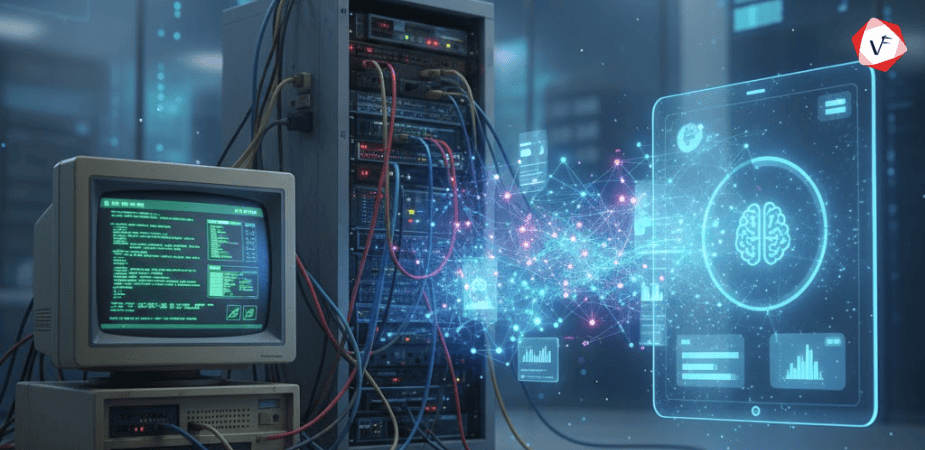
Understanding Your Legacy Infrastructure Before AI Implementation
Before attempting any AI integration into legacy software systems, organizations must conduct comprehensive assessments of their existing infrastructure. Legacy systems often operate on outdated programming languages, database structures, and hardware configurations that may not readily support artificial intelligence applications.
Key assessment areas include:
- Documentation gaps: Legacy software systems typically suffer from poor documentation, making it difficult to understand data flows and system dependencies
- System mapping: Identify critical business processes and document data structures before proceeding with AI implementation
- Performance evaluation: Assess current system performance and identify bottlenecks that could impact AI processing capabilities
- Scalability limitations: Recognize that legacy systems often struggle with scalability, and adding AI workloads without proper preparation can lead to system failures
This foundational work ensures that AI integration efforts align with existing business logic and operational requirements. Understanding these limitations becomes crucial for determining the most effective AI integration approach.
API-First Strategies for Seamless AI Integration
Implementing an API-first approach represents one of the most effective methods for integrating AI into legacy software systems. Application Programming Interfaces serve as bridges between legacy applications and artificial intelligence services, enabling communication without requiring extensive modifications to existing codebases.
Benefits of API-First Integration:
- Minimal disruption: Maintain legacy software systems largely unchanged while leveraging cloud-based AI services
- Reduced risk: Lower the probability of introducing bugs or system instabilities
- Flexibility: Access robust APIs from major cloud providers for various AI tasks, from natural language processing to computer vision
- Gradual adoption: Test artificial intelligence capabilities on specific use cases before expanding to broader implementations
When designing API integration strategies, organizations should prioritize security and data governance. Legacy software systems may lack robust security frameworks, making it essential to implement proper authentication, encryption, and access controls at the API level.
This incremental strategy helps build confidence in AI integration while providing opportunities to refine processes and address technical challenges before full-scale deployment.
Data Migration & Preparation Challenges
The successful integration of AI into legacy software systems heavily depends on data quality and accessibility. Legacy systems often store data in formats and structures that artificial intelligence algorithms cannot easily consume.
Critical Data Preparation Steps:
- Data cleansing: Address inconsistent formats, missing values, and outdated information that can significantly impact AI model performance
- Standardization: Establish data quality standards and implement validation processes
- Format transformation: Create standardized formats that artificial intelligence systems can effectively utilize
- Processing requirements: Determine whether real-time or batch processing is needed for your AI applications
The data migration process should consider both immediate and periodic data access requirements. Some AI applications require instant access to fresh data, while others can operate effectively with periodically updated datasets. Understanding these requirements helps organizations design appropriate data pipelines that support both legacy software systems and new artificial intelligence capabilities.
Organizations should also establish data governance frameworks that ensure compliance with privacy regulations and internal policies. AI integration into legacy software systems often involves exposing sensitive business data to new processing environments, making robust governance essential for maintaining security and regulatory compliance.
Microservices Architecture for Legacy Modernization
Adopting a microservices architecture provides an excellent pathway for integrating AI into legacy software systems without requiring complete system overhauls. This approach involves breaking down monolithic legacy applications into smaller, independent services that can be updated and enhanced individually.
Advantages of Microservices for AI Integration:
- Incremental implementation: Introduce artificial intelligence capabilities gradually, focusing on specific business functions or processes
- Improved resilience: Isolate AI-enhanced microservices so issues don’t impact the entire legacy software system
- Enhanced scalability: Scale individual services based on demand without affecting the entire system
- Reduced risk: Test and optimize artificial intelligence features in isolation before broader deployment
For example, a legacy customer relationship management system could be enhanced with AI-powered recommendation engines or predictive analytics through targeted microservice implementations, without disrupting core CRM functionality.
When implementing microservices for AI integration, organizations should establish clear service boundaries and communication protocols. Legacy software systems may not be designed for distributed architectures, requiring careful planning to ensure smooth integration between traditional components and new AI-powered services.
Addressing Performance & Scalability Concerns
AI integration into legacy software systems often introduces significant performance challenges that organizations must carefully address. Artificial intelligence workloads typically require substantial computational resources, and legacy infrastructure may struggle to handle these additional demands without proper optimization and scaling strategies.
Performance Optimization Strategies:
- Baseline monitoring: Establish performance metrics for legacy software systems before implementing AI features
- Continuous tracking: Monitor system performance throughout the integration process to identify bottlenecks early
- Intelligent caching: Cache pre-computed AI results, model predictions, and frequently accessed data to reduce processing overhead
- Load balancing: Distribute AI workloads effectively to prevent overwhelming legacy systems
- Hybrid architectures: Offload AI processing to dedicated servers or cloud services while maintaining legacy applications on existing infrastructure
Caching strategies play a vital role in optimizing AI performance within legacy environments. Implementing intelligent caching mechanisms can significantly improve response times and reduce the computational burden on aging infrastructure.
Resource allocation requires careful consideration when integrating AI into legacy software systems. This approach ensures that artificial intelligence workloads don’t overwhelm legacy systems while providing the computational power necessary for effective AI implementation.
Security Considerations & Risk Mitigation
Integrating AI into legacy software systems introduces new security vectors and risks that organizations must proactively address. Legacy systems often lack robust security frameworks, making them vulnerable when exposed to artificial intelligence services and external data processing environments.
Essential Security Measures:
- End-to-end encryption: Implement encryption for all data flows between legacy software systems and AI platforms
- Enhanced authentication: Deploy multi-factor authentication and role-based access controls
- Audit logging: Maintain comprehensive logs of all AI-related activities and data access
- Model protection: Implement AI-specific security measures to prevent adversarial attacks
- Regular assessments: Conduct security audits and penetration testing throughout the integration process
Access control and authentication mechanisms require careful review and enhancement during AI integration projects. Legacy software systems may rely on outdated security protocols that don’t meet current standards for artificial intelligence applications.
Organizations should also consider implementing AI-specific security measures, such as model protection and adversarial attack prevention. Artificial intelligence models integrated into legacy software systems may become targets for malicious attacks, requiring specialized security controls to maintain system integrity and protect valuable intellectual property.
Regular security assessments help identify vulnerabilities introduced by artificial intelligence components and ensure that security measures remain effective as the integration progresses.
Cost Management & ROI Optimization
Managing costs during AI integration into legacy software systems requires careful planning and ongoing optimization. Organizations must balance the expenses associated with artificial intelligence implementation against the expected business benefits and return on investment.
Key Cost Considerations:
- Cloud-based services: Leverage pay-as-you-use pricing models to scale AI capabilities based on actual demand
- Usage monitoring: Carefully track consumption patterns to avoid unexpected costs
- Training investments: Budget for comprehensive training programs covering both legacy systems and AI technologies
- Expert partnerships: Consider collaborating with external specialists to bridge knowledge gaps
- Total cost of ownership: Account for ongoing maintenance, updates, and optimization activities
Training and development expenses represent significant cost factors in AI integration projects. Legacy software systems may require specialized knowledge that’s becoming increasingly scarce, while artificial intelligence technologies demand new skill sets.
Organizations should establish clear metrics for measuring AI integration success and regularly evaluate whether the benefits justify the continued investment in artificial intelligence capabilities. This ongoing assessment ensures resources are allocated effectively and ROI targets are met.
Change Management & User Adoption Strategies
Successful AI integration extends beyond technical implementation—it requires effective change management and user adoption strategies. Organizations must develop comprehensive training programs that demonstrate how AI integration enhances rather than replaces existing capabilities.
Effective Change Management Practices:
- Hands-on training: Provide legacy software system users with practical experience using new AI features
- Use case focus: Address specific scenarios relevant to daily operations, showing clear connections between AI capabilities and improved business outcomes
- Clear communication: Articulate the reasons for integrating artificial intelligence into legacy software systems
- Regular updates: Maintain momentum and address concerns throughout the integration process
- Feedback loops: Create channels for users to share experiences and suggestions for improvement
Legacy software system users need to understand the value of AI enhancements and build confidence in the new functionality. This training should demonstrate how AI augments human capabilities and improves productivity rather than replacing jobs or complicating workflows.
Organizations that invest in comprehensive change management programs see significantly higher adoption rates and faster realization of AI integration benefits.
Final Thoughts: Your Path to Successful AI Integration
Successfully integrating AI into legacy software systems requires strategic planning, technical expertise, and careful attention to performance, security, and cost considerations. Organizations that approach this challenge methodically—focusing on API integration, microservices architecture, and gradual implementation—can achieve significant business value while maintaining operational stability.
The transformation process demands patience and persistence, but the potential benefits of enhanced automation, improved decision-making, and increased operational efficiency justify the investment. Starting with pilot projects, building on successes, and learning from challenges creates a sustainable path toward AI-enhanced legacy systems.
For organizations seeking expert guidance in this complex undertaking, Vofox’s AI/ML development services provide the specialized knowledge and proven methodologies necessary to navigate legacy modernization challenges successfully. Our team brings decades of experience in both legacy system management and cutting-edge artificial intelligence implementation.
Contact us now and discover how we can help transform your legacy infrastructure into an AI-powered competitive advantage.
Frequently Asked Questions
What is the best approach for integrating AI into legacy software systems?
An API-first approach is one of the most effective methods for integrating AI into legacy systems. This strategy allows you to leverage cloud-based AI services while maintaining your existing codebase largely unchanged, minimizing disruption and reducing implementation risks.
How long does it take to integrate AI into a legacy system?
The timeline varies based on system complexity, but most organizations should expect 6-18 months for comprehensive AI integration. Starting with pilot projects and incremental implementation helps build confidence while managing risks effectively.
What are the main challenges in AI integration for legacy systems?
Key challenges include data quality issues, compatibility problems, performance limitations, security vulnerabilities, and substantial costs. Successful integration requires careful assessment, strategic planning, and addressing each challenge systematically through proven methodologies.
Do I need to replace my legacy system to use AI?
No, complete replacement is not necessary. Modern integration approaches like API-first strategies and microservices architecture allow you to add AI capabilities to existing systems without full system overhauls, preserving your investment in legacy infrastructure.
What are the typical costs of AI integration for legacy systems?
Costs vary widely based on scope and complexity, but organizations should budget for infrastructure upgrades, cloud services, data preparation, training, and ongoing maintenance. Cloud-based AI services with pay-as-you-use models can help control costs while providing flexibility for scaling.