What is Agentic AI?
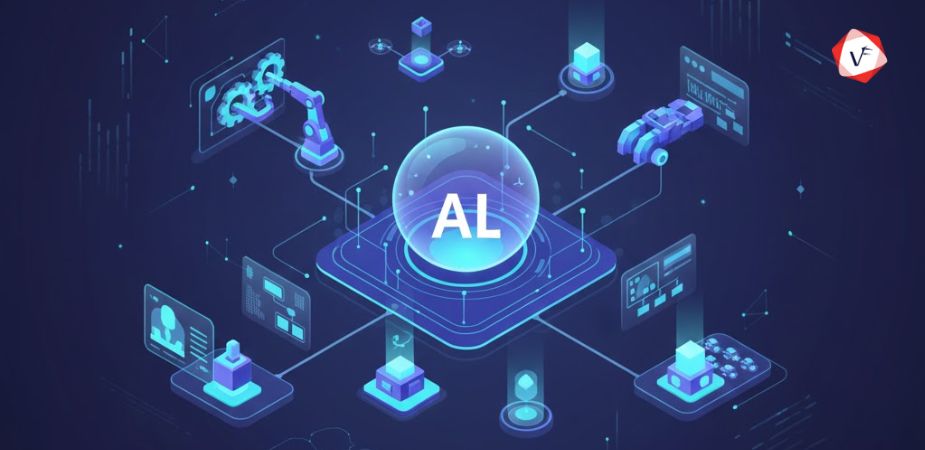
Agentic AI is a type of artificial intelligence that acts as an “agent.” This means it can operate autonomously with minimal human intervention, making it fundamentally different from conventional AI systems.
Key capabilities of agentic AI include:
- Environmental understanding: Perceives and interprets its surroundings using sensors, cameras, or online information sources
- Goal setting: Establishes objectives based on its programming and understanding of desired outcomes
- Strategic planning: Develops multi-step plans to achieve goals, breaking down complex objectives into manageable tasks
- Autonomous action: Executes decisions and takes actions without constant human supervision or intervention
In simple terms, agentic AI is AI that thinks and acts on its own. Traditional AI needs instructions for every task, while agentic AI can figure out what to do next based on objectives.
How Does Agentic AI Work?
Agentic AI combines several AI technologies to operate independently. Understanding these core components helps explain how autonomous systems function effectively.
1. Perception
Agentic AI collects data from its surroundings using sensors, cameras, or online information. This allows it to “see” and “understand” the environment. Advanced perception systems process visual, auditory, and sensor data in real-time to build comprehensive environmental models.
2. Reasoning and Decision-Making
Once it perceives its environment, agentic AI uses reasoning algorithms to analyze data and make decisions. It evaluates multiple choices and determines the most effective way to accomplish its objective. This process involves weighing trade-offs, assessing risks, and prioritizing actions based on goal alignment.
3. Planning
Planning is a core part of agentic AI. It can break down a big goal into smaller steps, decide the order of actions, and adjust the plan as the situation changes. Dynamic planning capabilities allow the system to respond to unexpected obstacles and changing conditions in real-time.
4. Learning
Over time, agentic AI improves by analyzing past outcomes. If an action fails to achieve the desired result, the AI adapts and tries a different approach next time. This continuous learning process leverages machine learning algorithms that identify patterns, optimize strategies, and refine decision-making over time.
5. Acting
Finally, agentic AI takes action. This can be moving a robot arm, sending emails, or making changes in a digital system. The AI monitors the results and continues adjusting its actions until the goal is achieved. Feedback loops ensure that actions align with objectives and enable course correction when necessary.
Examples of Agentic AI in Action
Agentic AI is already being applied in several areas, demonstrating its transformative potential across industries:
1. Autonomous Vehicles
Self-driving cars are a classic example of agentic AI. They sense the road, plan routes, make decisions to avoid obstacles, and drive safely without human input. Advanced systems process thousands of data points per second from cameras, radar, and lidar sensors to navigate complex traffic scenarios.
2. Robotic Process Automation (RPA)
In business operations, agentic AI can automate tasks such as data entry, invoice processing, or customer support. It can make decisions based on rules and even adapt to new scenarios without constant supervision, dramatically reducing operational costs and improving accuracy.
3. Smart Manufacturing
In factories, agentic AI controls robots that adjust production lines, detect errors, and optimize processes. These systems plan actions and solve problems on their own, increasing efficiency and reducing human intervention. Predictive maintenance capabilities prevent equipment failures before they occur.
4. Digital Assistants
Next-generation AI assistants are becoming agentic. They can plan your schedule, make recommendations, and even negotiate on your behalf, learning from previous interactions. These systems anticipate needs, proactively suggest actions, and handle complex multi-step tasks autonomously.
Benefits of Agentic AI
Agentic AI offers several advantages over traditional AI, making it an attractive investment for forward-thinking organizations:
- Enhanced efficiency: Agentic AI can complete complex tasks faster than humans or standard AI. By planning and acting independently, it reduces the need for constant supervision, freeing human workers to focus on strategic initiatives
- Superior adaptability: It can adapt to changing conditions in real-time. If something goes wrong, agentic AI finds alternative ways to achieve its goals without requiring human intervention or reprogramming
- Reduced human error: By taking decisions based on data and learning from experience, agentic AI reduces mistakes that humans might make, particularly in repetitive or high-pressure situations
- Exceptional scalability: Agentic AI can handle multiple tasks simultaneously and scale operations without increasing human workload, making it ideal for growing organizations
- Continuous learning and improvement: Because it learns from outcomes, agentic AI improves over time, becoming more intelligent and capable with each interaction and iteration
Challenges of Agentic AI
Despite its potential, agentic AI comes with significant challenges that organizations must address:
1. Safety and Control
Autonomous AI can make unexpected decisions. Ensuring it acts safely and ethically is crucial, especially in critical industries like healthcare or transportation. Organizations must implement robust safety protocols and fail-safe mechanisms.
2. Transparency
Agentic AI can make decisions in complex ways that humans do not fully understand. This “black box” problem raises concerns about accountability and makes it difficult to debug issues or explain decisions to stakeholders.
3. Cost and Implementation
Developing and deploying agentic AI requires significant investment in technology, infrastructure, and skilled personnel. The upfront costs can be substantial, though long-term benefits often justify the investment.
4. Data Dependency
Agentic AI relies on data to make decisions. Data errors or biases may lead to wrong or inequitable results. Ensuring data quality, accuracy, and fairness is essential for reliable AI performance.
5. Ethical Concerns
Autonomous AI can affect jobs, privacy, and security. Companies must balance efficiency with ethical responsibility, considering the broader societal implications of widespread AI deployment.
Agentic AI vs Traditional AI
It helps to compare agentic AI with traditional AI to understand the fundamental difference:
Traditional AI:
- Executes predefined instructions and reacts to inputs
- Requires explicit programming for each task
- Limited ability to adapt to new situations
- Example: A chatbot that answers questions based on scripts
Agentic AI:
- Acts autonomously, sets goals, plans, learns, and adapts
- Can determine appropriate actions based on objectives
- Continuously improves through experience
- Example: A self-driving vehicle handling traffic independently
Agentic AI is smarter, more flexible, and capable of performing tasks without constant supervision. It represents a fundamental shift from reactive systems to proactive, goal-oriented intelligence.
Real-World Applications of Agentic AI
1. Healthcare
Agentic AI can monitor patient data, detect anomalies, and recommend treatments. It can plan care routines and alert doctors automatically. Advanced systems analyze medical images, predict disease progression, and personalize treatment plans based on individual patient characteristics.
2. Finance
In finance, agentic AI can analyze markets, make trading decisions, and manage investment portfolios independently. These systems process vast amounts of financial data, identify trends, assess risks, and execute trades at optimal times to maximize returns.
3. Retail and E-Commerce
Agentic AI can manage inventory, predict customer demand, optimize pricing, and automate customer service. Intelligent systems personalize shopping experiences, reduce stockouts, and improve operational efficiency across the retail value chain.
4. Logistics
Agentic AI plans delivery routes, predicts delays, and optimizes warehouse operations. This reduces costs and improves customer satisfaction. Smart logistics systems coordinate complex supply chains, manage fleet operations, and respond dynamically to disruptions.
5. Research and Development
Agentic AI can design experiments, analyze results, and even propose new products or solutions without human input. In pharmaceutical research, AI systems accelerate drug discovery by identifying promising compounds and predicting their effectiveness.
Future of Agentic AI
The path ahead for agentic AI is both promising and revolutionary:
- Fully autonomous systems: AI that can operate without human supervision in complex environments, handling unpredictable situations with human-level or superior judgment
- Human-AI collaboration: Humans will work alongside agentic AI to make better decisions and increase productivity, combining human creativity with AI’s analytical capabilities
- Ethical AI development: Governments and organizations will focus on guidelines to ensure safe, transparent, and ethical AI use, establishing frameworks that protect societal interests
- AI in everyday life: From personal assistants to smart homes, agentic AI will make daily tasks easier by planning and acting on our behalf, seamlessly integrating into our routines
- Cross-domain intelligence: Future agentic AI systems will transfer learning across different domains, applying knowledge gained in one area to solve problems in unrelated fields
How Businesses Can Prepare for Agentic AI
Organizations that prepare strategically can harness agentic AI to improve efficiency, reduce costs, and stay competitive:
- Invest in data infrastructure: Collect and manage high-quality data to train AI. Implement robust data governance frameworks that ensure data accuracy, security, and accessibility
- Train employees: Help teams understand how to work with autonomous AI systems. Develop comprehensive training programs that address technical skills, ethical considerations, and change management
- Start small: Implement agentic AI in specific tasks before scaling across the organization. Pilot programs help identify challenges, demonstrate value, and build organizational confidence
- Focus on ethics: Develop policies to ensure AI acts responsibly and safely. Establish governance structures that monitor AI behavior and address ethical concerns proactively
- Collaborate with experts: Work with AI developers and consultants to implement agentic AI effectively. External expertise accelerates adoption and helps avoid common pitfalls
By preparing strategically, businesses can harness agentic AI to improve efficiency, reduce costs, and stay competitive in an increasingly AI-driven marketplace.
Ethical and Regulatory Considerations for Agentic AI
As agentic AI becomes more autonomous, it introduces significant ethical and regulatory challenges. Businesses and developers must consider these aspects to ensure safe, responsible, and trustworthy AI deployment.
1. Ethical AI Use
Agentic AI has the ability to make independent decisions, which raises ethical questions about its actions. Organizations must ensure that AI systems operate without causing harm to humans or society. This involves designing AI models to avoid biased decision-making, promoting fairness, and ensuring transparency in how decisions are made. Ethical guidelines must address potential misuse, unintended consequences, and moral accountability of autonomous systems.
2. Data Privacy and Security
Autonomous AI relies heavily on data to perceive, reason, and act. Protecting sensitive and personal data is critical, particularly when AI handles customer information, medical records, or financial details. Companies must implement strong encryption, access controls, and comply with data protection regulations such as GDPR or similar local frameworks. Ensuring secure data storage and responsible usage is a prerequisite for maintaining public trust in AI systems.
3. Accountability and Liability
One of the central challenges with agentic AI is determining accountability when autonomous decisions result in errors or damages. Establishing clear frameworks for liability is crucial. Organizations must define who is responsible—the developer, the deploying company, or the AI system itself. Regulatory bodies may require companies to maintain audit trails and decision logs to demonstrate compliance and facilitate accountability.
4. Industry-Specific Guidelines
Certain industries demand stricter regulatory oversight due to the high stakes involved:
- Healthcare: AI recommendations must be accurate and safe for patient care, with clear validation protocols and human oversight
- Finance: Autonomous systems making investment decisions require compliance with securities and financial regulations
- Autonomous vehicles: Must adhere to traffic laws and safety standards, with rigorous testing and certification processes
Tailoring agentic AI deployment to industry-specific regulations is essential to avoid legal issues and ensure operational safety.
5. Global Standards and Collaboration
The rapid adoption of agentic AI necessitates international cooperation. Governments, industry associations, and AI research organizations are working together to establish global standards for ethical and safe AI practices. Cross-border collaboration ensures consistency in regulations, promotes responsible innovation, and mitigates risks associated with autonomous AI deployment. Organizations that align with these standards can build trust with consumers and regulatory authorities while fostering sustainable AI innovation.
Final Thoughts
Agentic AI marks the next stage in the development of artificial intelligence. Unlike conventional AI, it has the ability to plan, make decisions, and adjust its actions independently. From autonomous vehicles to intelligent factories and smart digital assistants, agentic AI is reshaping industries and redefining what’s possible with artificial intelligence.
The benefits are clear: increased efficiency, reduced errors, better decision-making, and continuous learning. However, challenges like safety, transparency, and ethical considerations must be managed carefully to ensure responsible deployment.
For businesses and individuals willing to embrace it, agentic AI represents a future where machines can think, act, and deliver results autonomously, helping humans focus on higher-level tasks and creative solutions. The era of autonomous AI is here, and its potential is limitless.
Looking to implement AI solutions that drive real business value? Vofox’s AI development services can help you navigate the complexities of agentic AI and develop custom solutions tailored to your organization’s needs. Get in touch with our experts today to explore how autonomous AI can transform your business operations.