Not complex orders. Standard products they’d been making for years. But the order would sit in someone’s email inbox waiting for data entry. Then wait again for inventory verification. Then wait for credit approval. Then wait for scheduling. Each handoff added hours or days of delay, and any mistake meant starting over.
They’ve since cut that to about forty minutes, start to finish. Same products, same fundamental steps, but everything flows automatically now. The order comes in through their portal, inventory updates instantly, payment processes in real-time, and production schedules adjust without anyone touching a spreadsheet.
That’s what end-to-end process digitization actually delivers. Not just faster versions of existing workflows, but fundamentally different ways of working where information moves seamlessly between systems and people intervene only when their judgment is needed.
The catch? Getting there requires rethinking how work flows through your organization, not just adding software to broken processes.
What We’ll Cover
What end-to-end digitization really means
Let’s start with what this isn’t. It’s not scanning paper documents and calling that digital. It’s not adding one more software system to your stack. It’s not automating individual tasks while keeping everything else manual.
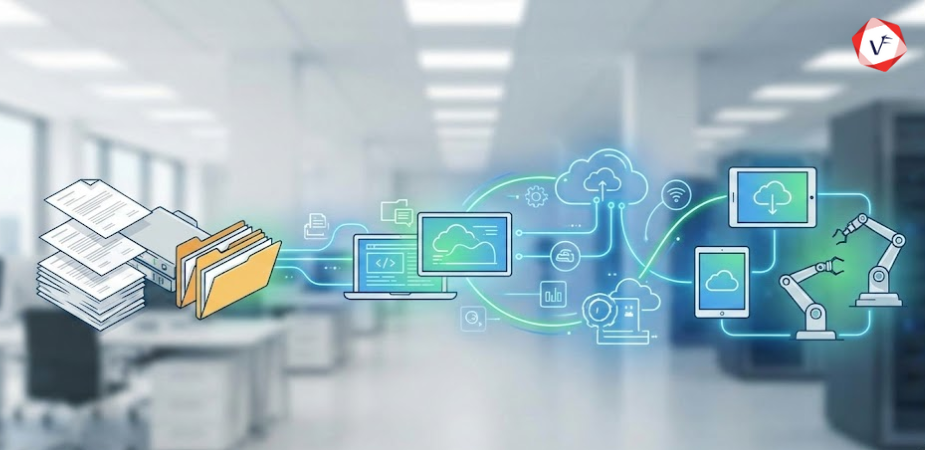
End-to-end process digitization means converting entire workflows into connected digital experiences, from the moment something starts until it’s complete. You’re examining every step, every handoff, every decision point, and figuring out how digital technology can eliminate friction.
Think about how a typical customer order moves through a traditional business. Someone receives it by phone or email and manually enters the information. Another person checks inventory. A third processes payment. A fourth schedules delivery. Each handoff creates delay and introduces potential for error.
Now imagine that same order entering through a digital interface where the system automatically checks inventory, processes payment, updates production schedules, and sends fulfillment instructions to the warehouse. No waiting. No manual data entry. No transcription errors. That’s the transformation we’re talking about.
This extends far beyond customer-facing processes. Employee onboarding, expense management, procurement, maintenance requests, all of these benefit equally from end-to-end digitization. New employees complete paperwork, training, and system access through one platform instead of visiting five different departments with paper forms. Expense reports flow from submission through approval to reimbursement with automatic policy compliance checks.
The key insight is that you’re not digitizing tasks in isolation. You’re digitizing the connections between tasks, the flow of information, the decision logic that determines what happens next. That’s what creates the real value.
The technology that makes it work
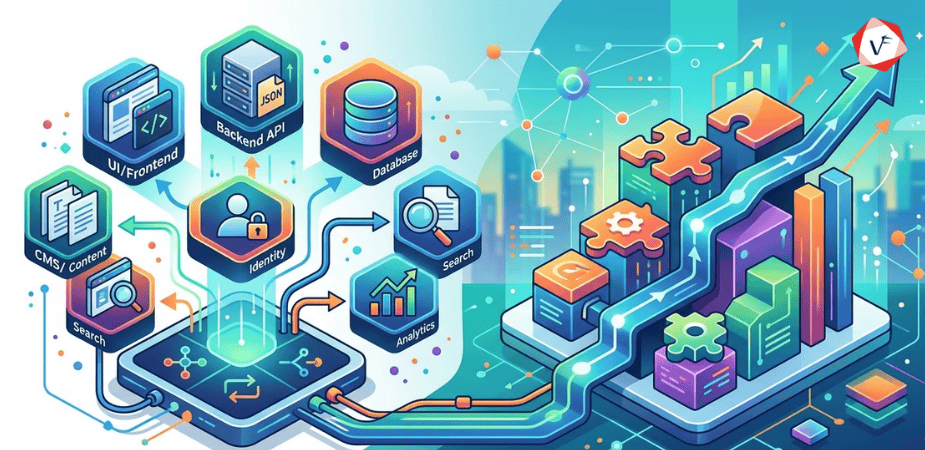
Successful digitization rests on several technologies working together. None of them are optional.
APIs connect everything
Application programming interfaces are the connective tissue that lets different systems talk to each other. Your CRM needs to share customer data with your order system. Your order system needs to update your inventory system. Your inventory system needs to trigger notifications in your warehouse management system.
Without APIs, you’re back to manual data transfer between disconnected systems. With them, information flows automatically across your entire operation. Every modern business system should expose APIs that let it integrate with other tools. If it doesn’t, that’s a red flag for digitization efforts.
Cloud provides the foundation
Cloud computing gives you the infrastructure flexibility that digitization requires. You can scale up during busy periods without buying servers that sit idle most of the year. You can enable remote access so processes continue regardless of where people work. You can adopt new capabilities quickly without massive infrastructure investments.
The elasticity matters more than you’d think. I’ve watched companies struggle with on-premise systems that couldn’t handle growth or seasonal spikes. Cloud infrastructure adapts automatically, which means your digital processes don’t break when volumes increase.
Workflow engines orchestrate everything
These platforms define how work moves through your digital processes. They specify rules: if this happens, do that. If approval is needed, route to this person. If something sits too long, escalate automatically.
Advanced workflow engines handle complex scenarios with multiple conditional branches. A customer order might follow different paths depending on order size, customer type, product availability, or payment method. The workflow system manages all these variations without human intervention for routine cases.
Analytics turn activity into insight
Every digital interaction generates data about cycle times, bottlenecks, error rates, and resource utilization. Analytics platforms aggregate this information to reveal patterns you couldn’t see when processes were manual.
You discover that certain types of orders always take longer. That specific approval steps create bottlenecks. That errors cluster around particular data entry fields. This visibility enables continuous improvement in ways that weren’t possible with paper-based or disconnected digital processes.
How to implement it without chaos
Here’s the biggest mistake organizations make: digitizing broken processes.
They take workflows that are inefficient, full of unnecessary steps, and plagued by unclear responsibilities, then automate all of that dysfunction. You end up with faster bad processes instead of good ones.
Start with process analysis and redesign. Map your current workflows honestly, including the workarounds people use to get things done. Identify pain points. Question every step: is this necessary? Could it be eliminated? Combined with something else? Automated entirely?
This clean-slate thinking is uncomfortable because it challenges established ways of working. But it’s essential. Digital workflows don’t have the same constraints as manual ones, so don’t let legacy thinking limit what’s possible.
Begin with high-value, high-pain processes
You can’t digitize everything at once. Pick processes where the payoff is substantial and the pain is acute.
Finance departments often start with accounts payable or expense management because manual processing costs are measurable and error rates are significant. HR teams frequently target recruiting and onboarding because these processes directly affect employee experience and company reputation.
The combination of high value and high pain ensures you’ll get organizational support and that people will tolerate the disruption of change. Nothing builds momentum like solving problems everyone agrees are real.
Use phased rollouts to reduce risk
Don’t attempt to transform everything simultaneously. Select a pilot process, implement digitization, refine based on what you learn, then expand to additional areas.
This measured approach lets teams develop expertise, adjust to new workflows, and demonstrate value before committing to broader transformation. You’ll make mistakes on your first implementation. Better to make them on a contained pilot than across your entire operation.
Each phase builds on previous learning. The second process digitization goes faster than the first. The fifth is even smoother. You’re building organizational capability, not just implementing technology.
Change management matters as much as technology
People need to understand why changes are happening, what benefits they’ll bring, and how they’ll be supported through transition.
Training shouldn’t just cover how to use new systems. It should explain new workflows, new responsibilities, and new ways of collaborating. Clear communication about the rationale for change and the support available makes the difference between adoption and resistance.
I’ve seen technically perfect digitization projects fail because organizations neglected the human side. The systems worked beautifully but nobody wanted to use them. Conversely, I’ve seen less sophisticated implementations succeed because people understood the benefits and felt supported through change.
Results you can actually measure
The benefits of digitization show up in concrete, measurable ways.
Cycle times drop dramatically
Process cycle times often decrease by 50 to 70 percent as manual handoffs and waiting periods disappear. Work that took days or weeks gets completed in hours or minutes when systems handle routine tasks automatically.
This acceleration compounds throughout your organization. Faster processes enable faster decision-making. Faster decisions let you respond to market conditions more quickly. Speed becomes a competitive advantage, not just an operational improvement.
Error rates fall substantially
When you eliminate manual data entry and transcription, errors decline dramatically. Systems validate information as it enters, check consistency against business rules, and flag anomalies for human review.
The cumulative effect of reducing errors across multiple processes significantly improves operational quality. You spend less time fixing mistakes and more time moving forward. Customer satisfaction improves because things work correctly the first time.
Costs decrease from multiple sources
Direct labor costs drop as automation handles routine tasks. But savings extend beyond payroll. Physical storage for paper documents disappears. Printing and mailing expenses evaporate. The overhead required to manage manual processes reduces.
Many organizations report that digitization pays for itself within 12 to 24 months through these combined savings. The ongoing operational efficiency then becomes pure benefit.
Satisfaction improves on both sides
Customers appreciate faster response times, transparency into process status, and self-service convenience. They can see where their order is, when it will arrive, and what’s happening without calling anyone.
Employees value spending less time on tedious manual work and more on activities requiring judgment and creativity. Reduced frustration with inefficient processes contributes to better retention and engagement. People don’t quit because they’re tired of fighting bad systems.
Obstacles everyone hits
Digitization comes with predictable challenges that require deliberate strategies.
Legacy systems resist integration
Older systems often lack modern APIs or were designed to work in isolation. You face decisions about building custom integration layers, using middleware platforms, or replacing systems entirely.
The cost-benefit analysis gets complicated. Sometimes it’s cheaper to work around a legacy system temporarily while planning replacement. Sometimes the integration cost exceeds the replacement cost. There’s no universal answer, just careful analysis of your specific situation.
Data quality issues surface immediately
When previously disconnected systems start sharing information, data problems that caused little harm in manual processes create significant problems in automated workflows.
Inconsistent formatting, duplicate records, incomplete data, all of these require cleanup. You need data governance programs that establish standards, assign ownership, and implement quality procedures. This work isn’t glamorous but it’s essential.
Security becomes more complex
Digital processes spanning multiple systems need to protect sensitive information at every step. Authentication, authorization, encryption, and audit capabilities all become critical.
Regulatory requirements around data privacy, residency, and retention must be built into processes rather than added afterward. Compliance can’t be an afterthought when you’re digitizing workflows that handle customer data, financial information, or personal details.
People resist change for legitimate reasons
Employees comfortable with established workflows question why change is necessary. Some fear automation threatens their roles. Others simply don’t want to learn new systems.
The resistance often stems from legitimate concerns rather than simple stubbornness. Maybe previous change initiatives failed. Maybe they’ve seen technology make work harder instead of easier. Maybe they’re worried about job security.
Address these concerns directly. Explain the rationale. Involve people in redesign. Demonstrate how digitization creates opportunities for more meaningful work rather than eliminating jobs. Show rather than tell whenever possible.
Ready to transform your workflows?
At Vofox Solutions Inc, we help organizations implement end-to-end process digitization that delivers measurable results. Our team brings deep expertise in process analysis, system integration, and change management to guide you through transformation.
Let’s discuss how digitization can improve your operations. Contact our digitization experts to explore solutions tailored to your specific processes and goals.
Tracking improvement over time
You need robust frameworks for measuring outcomes and identifying opportunities for refinement.
Establish baselines before you start
Document current performance before digitization begins. Process cycle times, error rates, customer satisfaction scores, operational costs. These baseline metrics provide the reference point for demonstrating improvement.
Without baselines, you can’t prove digitization worked. People will argue about whether things actually got better. Hard data eliminates those debates.
Make performance visible to everyone
Real-time dashboards show how work moves through digitized processes, where bottlenecks develop, and how individual contributions affect overall performance.
When people can see these metrics, they become active participants in optimization rather than passive system users. They notice when something slows down and investigate why. They suggest improvements based on patterns they observe.
This transparency transforms digitization from a technology project into a continuous improvement program where gains accumulate over time.
Use process mining to reveal hidden patterns
Process mining tools analyze the digital footprints that automated workflows leave behind, showing how processes actually operate versus how you think they operate.
You might discover that certain customer requests follow completely different paths than standard orders, suggesting your process design should accommodate these variations explicitly. Or that particular approval steps rarely change outcomes, indicating they could be eliminated or streamlined.
These insights come from actual operational data rather than assumptions or guesses. They reveal optimization opportunities you’d never find through observation alone.
Common questions answered
What is end-to-end process digitization?
End-to-end process digitization means converting entire workflows into seamless digital experiences, from initial input through final output. Rather than digitizing isolated tasks, it connects all steps in a process so information flows automatically between systems without manual handoffs, eliminating bottlenecks and errors while providing real-time visibility into operations. It’s about reimagining how work flows through your organization using digital technology.
How is end-to-end digitization different from just adding software?
End-to-end process digitization redesigns how work flows through your organization, connecting people, systems, and data at every step. Simply adding software to existing processes often just automates inefficiency, making bad processes faster without making them better. True digitization analyzes entire value chains, eliminates unnecessary steps, integrates systems seamlessly, and reimagines workflows specifically for a digital environment rather than just automating manual procedures.
What are the main benefits of process digitization?
Process cycle times typically decrease by 50-70% as manual handoffs disappear, error rates decline substantially through automated validation and business rule enforcement, operational costs drop from reduced manual work and overhead, and both customer and employee satisfaction improve measurably. Organizations report digitization often pays for itself within 12-24 months through combined savings and efficiency gains, with ongoing benefits continuing indefinitely.
What technology is needed for end-to-end digitization?
Key technologies include APIs for system integration and data sharing, cloud computing for scalability and remote access, workflow automation engines to orchestrate processes and handle decision logic, and analytics capabilities for visibility and continuous optimization. These technologies work together to enable seamless information flow, eliminate manual handoffs, and provide the real-time visibility that makes continuous improvement possible.
How long does process digitization take?
Timeline varies by scope and complexity, but successful organizations use phased rollouts starting with high-value pilot processes, refining their approach based on lessons learned, then expanding to additional areas. Initial pilots might take 2-4 months to implement, with broader transformation occurring over 12-18 months as teams build expertise and extend digitization across more processes. Starting small and proving value reduces risk while building organizational capability.
Should we fix our processes before digitizing them?
Yes, absolutely. The biggest mistake is digitizing broken processes, which just gives you faster dysfunction. Start with process analysis and redesign, questioning every step and eliminating unnecessary work before implementing digital solutions. Clean-slate thinking about how work should flow in a digital environment produces better results than simply automating existing manual procedures. Redesign first, then digitize.
How do you handle employee resistance to digitization?
Address concerns directly through clear communication about why changes are happening and what benefits they bring. Involve employees in process redesign so they feel ownership rather than having changes imposed on them. Provide comprehensive training on new workflows, not just system operation. Demonstrate how digitization creates opportunities for more meaningful work rather than threatening jobs. Show successful examples and celebrate early wins to build momentum.
What metrics should we track to measure digitization success?
Track process cycle times, error rates, operational costs, customer satisfaction scores, and employee satisfaction. Establish baselines before digitization begins so you can demonstrate improvement quantitatively. Use real-time dashboards to make performance visible to everyone involved. Monitor these metrics continuously to identify optimization opportunities and ensure digitization delivers expected benefits over time.
Moving forward with confidence
End-to-end process digitization represents a fundamental shift in how organizations operate, not just incremental improvement to existing workflows.
The benefits are substantial and measurable. Cycle times drop by half or more. Errors decline dramatically. Costs decrease across multiple dimensions. Both customers and employees have better experiences. These aren’t theoretical improvements, they’re outcomes organizations achieve consistently when they approach digitization thoughtfully.
But success requires more than implementing technology. You need to rethink how work flows through your organization, not just automate what exists. You need to address both technical and human challenges, from legacy system integration to employee concerns about change. You need phased approaches that build capability gradually rather than attempting transformation overnight.
The organizations that succeed treat digitization as a journey of continuous improvement rather than a one-time project. They start with high-value processes, learn from implementation, refine their approach, and expand systematically. They measure rigorously and optimize based on data rather than assumptions.
Most importantly, they recognize that digital transformation is as much about people as technology. Systems only work when people understand them, trust them, and use them effectively. Change management, communication, and training matter as much as APIs and workflow engines.
If your organization is struggling with manual processes, disconnected systems, and workflows that create more frustration than value, end-to-end digitization offers a proven path forward. The technology is mature. The approaches are well-understood. The results are demonstrable.
The question isn’t whether digitization can work. It’s whether you’re ready to commit to the analysis, redesign, and change management required to make it work well. Done right, it transforms how you operate. Done poorly, it just automates dysfunction.
Choose thoughtfully. Start strategically. Measure continuously. And remember that the goal isn’t perfect processes, it’s significantly better ones that enable your organization to compete and deliver value more effectively.