- Enhanced developer productivity: Automating routine coding tasks and accelerating development cycles
- Reduced human error: Intelligent systems that catch bugs and vulnerabilities before production
- Accelerated time-to-market: Faster development and deployment of software products
- Improved code quality: Consistent adherence to best practices and coding standards
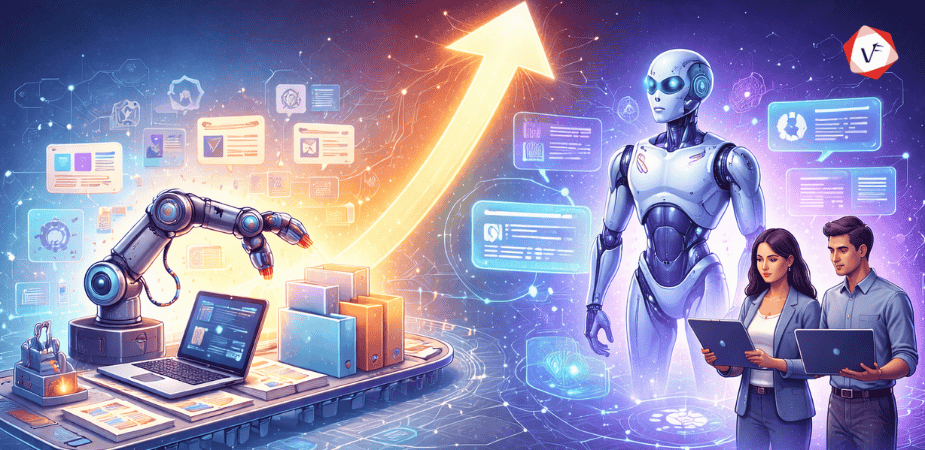
This transformation extends beyond simple automation, introducing sophisticated capabilities that enhance productivity and deliver high-quality software solutions. As organizations seek to remain competitive in an increasingly fast-paced technological environment, understanding and implementing AI-driven development tools have become essential.
The Rise of Intelligent Code Creation
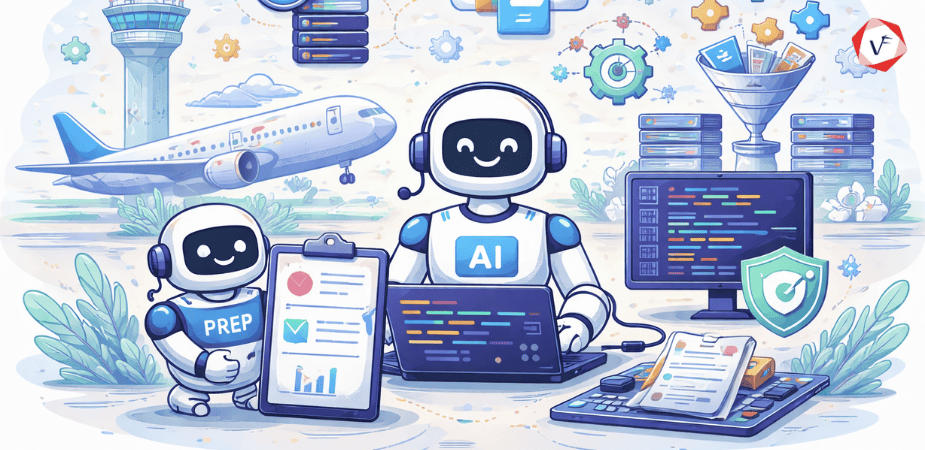
Artificial intelligence has introduced a paradigm shift in code generation, enabling developers to produce functional software through natural language prompts and contextual understanding. AI code generation tools analyze vast repositories of existing code to understand patterns, best practices, and common implementation approaches across multiple programming languages.
How AI Code Generation Works:
These systems can generate entire functions, classes, and even complete applications based on high-level descriptions provided by developers. The sophistication extends beyond simple template filling, as machine learning algorithms:
- Analyze context: Understand existing codebases and project-specific conventions
- Maintain consistency: Generate code that aligns with established architectural patterns
- Ensure integration: Produce code that seamlessly integrates with existing systems
- Preserve style: Maintain consistency in coding style and structure
Multi-Language Support and Versatility:
Modern AI code generation platforms support numerous programming languages, from traditional languages like Java and C++ to newer frameworks and specialized domains. The versatility of these tools allows development teams to leverage AI assistance across their entire technology stack.
This capability significantly reduces the time spent on routine coding tasks and allows developers to focus on complex problem-solving and architectural decisions that require human creativity and strategic thinking.
Automated Code Review: Beyond Human Limitations
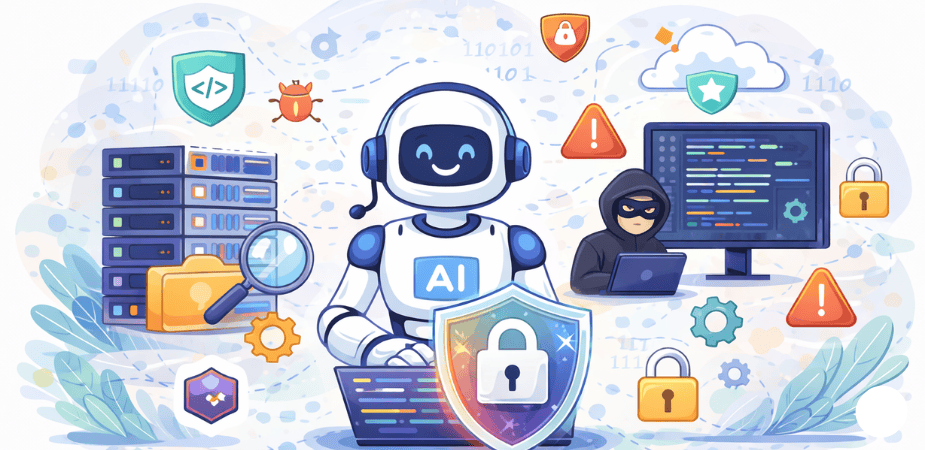
AI-powered code review systems represent a significant advancement in software quality assurance, offering capabilities that surpass traditional human-only review processes. These intelligent systems analyze code changes for potential bugs, security vulnerabilities, performance issues, and adherence to coding standards with remarkable speed and accuracy.
Advantages Over Traditional Code Review:
- Consistent vigilance: AI maintains focus across all submitted code without fatigue
- Comprehensive analysis: Detects subtle issues that human reviewers might miss
- Speed and efficiency: Analyzes large codebases in seconds rather than hours
- 24/7 availability: Provides continuous code quality monitoring
Continuous Learning Capabilities:
The machine learning algorithms powering these code review systems continuously learn from historical data, including previously identified bugs, security incidents, and performance bottlenecks. This learning capability enables AI reviewers to identify patterns and potential issues that might not be immediately apparent to human developers.
Advanced AI code review platforms can:
- Detect complex security vulnerabilities and potential exploits
- Identify potential memory leaks and resource management issues
- Suggest performance optimizations based on similar code patterns
- Analyze millions of repositories to provide contextual recommendations
Seamless Workflow Integration:
Integration with existing development workflows makes AI code review seamless and non-intrusive. These tools provide real-time feedback during the development process, allowing developers to address issues before code reaches the formal review stage. This proactive approach to code quality significantly reduces the time and effort required for manual reviews while improving overall software reliability.
Performance & Productivity Gains
The implementation of AI in software development workflows delivers measurable improvements in developer productivity and code quality metrics. Organizations utilizing AI code generation report significant reductions in time-to-completion for routine development tasks.
Quantifiable Productivity Improvements:
- 40-60% productivity increase for specific types of coding work
- Significant time savings on routine development tasks
- More time for strategic activities: Planning, UX optimization, and innovation
- Enhanced job satisfaction: Reduced mundane work increases engagement
Automating Repetitive Tasks:
AI code generation tools excel at handling repetitive coding tasks, boilerplate code creation, and implementation of well-established patterns. By automating these routine activities, developers can maintain focus on creative problem-solving and architectural design decisions that require human insight and creativity.
The reduction in mundane coding work contributes to improved job satisfaction among development teams, as professionals can engage more deeply with challenging and intellectually stimulating aspects of software creation.
Quality Improvements Alongside Efficiency:
Quality improvements accompany productivity gains when AI tools are properly integrated into development workflows. AI code generation systems produce code that adheres to established best practices and coding standards, reducing the likelihood of common errors and inconsistencies.
This consistency in code quality translates to:
- Fewer bugs in production environments
- Reduced maintenance costs over time
- Improved system reliability and stability
- Lower technical debt accumulation
Integration Challenges & Strategic Solutions
Successfully implementing AI in software development requires careful consideration of integration challenges and organizational readiness. Development teams must adapt existing workflows to accommodate AI tools while ensuring that human oversight remains integral to the development process.
The Human-AI Collaboration Model:
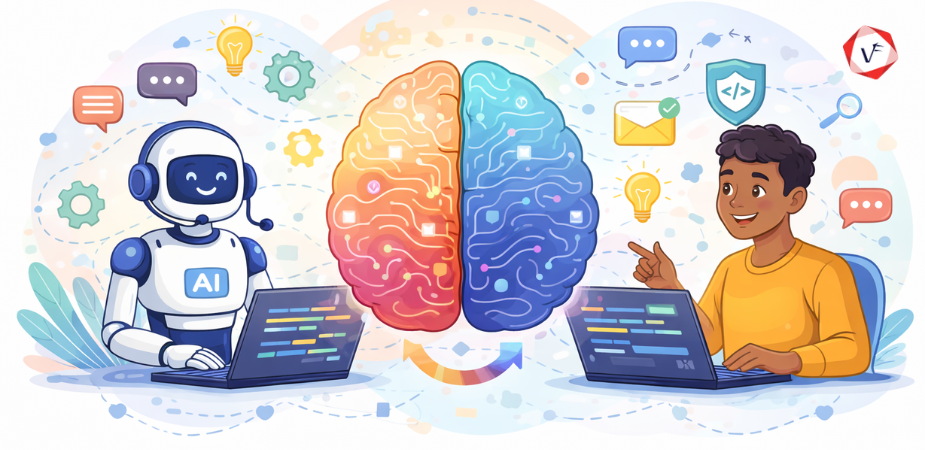
The most effective implementations combine AI capabilities with human expertise, creating collaborative environments where artificial intelligence enhances rather than replaces human developers. This partnership approach maximizes the strengths of both AI and human intelligence.
Training and Skill Development:
Training and skill development become critical components of successful AI integration in software development. Development teams need to understand how to:
- Effectively prompt AI tools: Learn optimal ways to communicate requirements
- Interpret AI suggestions: Evaluate and refine AI-generated code
- Maintain quality control: Implement oversight for automated processes
- Leverage AI capabilities: Maximize productivity without compromising quality
Organizations that invest in comprehensive training programs see higher adoption rates and better outcomes from their AI development tools.
Security and Compliance Considerations:
Security considerations play a crucial role in AI implementation for software development. Organizations must establish protocols for:
- Protecting proprietary code when using cloud-based AI services
- Implementing access controls for AI-generated code
- Maintaining audit trails for compliance purposes
- Ensuring data privacy and intellectual property protection
These security measures ensure that the benefits of AI code generation and review do not compromise intellectual property or regulatory compliance requirements.
Real-World Applications Across Industries
The practical applications of AI in software development span numerous industries and use cases, demonstrating the versatility and effectiveness of these tools across diverse sectors.
Financial Services:
Financial services organizations leverage AI code generation to rapidly prototype trading algorithms, risk assessment models, and compliance reporting systems. The ability to quickly generate and test financial software components accelerates time-to-market for new products while maintaining rigorous quality standards required in regulated environments.
Key benefits include:
- Rapid algorithm prototyping for trading systems
- Automated compliance code generation
- Risk model development and testing
- Regulatory requirement implementation
Healthcare Technology:
Healthcare technology companies utilize AI code review systems to ensure that medical software meets stringent safety and regulatory requirements. AI reviewers can identify potential issues in:
- Patient data handling: Ensuring HIPAA compliance and data security
- Medication dosing algorithms: Verifying accuracy and safety
- Medical device integration: Identifying potential safety issues
- Clinical workflow systems: Meeting healthcare-specific standards
This automated review capability supplements human expertise with a comprehensive analysis of code against healthcare-specific standards and regulations.
E-Commerce Platforms:
E-commerce platforms benefit from AI code generation for creating personalized shopping experiences, recommendation engines, and inventory management systems. The rapid prototyping capabilities of AI tools enable these companies to:
- Test new features quickly and iterate based on feedback
- Respond rapidly to changing market demands
- Optimize user experiences based on real-time data analysis
- Facilitate A/B testing through rapid creation of alternative implementations
Future Directions & Emerging Technologies
The trajectory of AI in software development points toward even more sophisticated capabilities and deeper integration with development workflows. Emerging technologies in natural language processing and machine learning promise to make AI code generation more intuitive and context-aware.
Next-Generation AI Capabilities:
Future AI systems will likely understand complex business requirements expressed in natural language and generate comprehensive software solutions that address multiple aspects of application development. These advanced systems will bridge the gap between business stakeholders and technical implementation.
Predictive Analytics Integration:
Predictive analytics integration represents another frontier in AI-enhanced software development. These systems will analyze:
- Development patterns: Historical team performance and workflow efficiency
- Team productivity metrics: Resource utilization and capacity planning
- Code quality trends: Identifying areas for improvement
- Project timeline risks: Potential challenges before they impact delivery
This predictive capability will enable development managers to make more informed decisions about project planning and resource management.
End-to-End Automation:
The convergence of AI code generation with automated testing and deployment pipelines promises to create fully automated development workflows for certain types of applications. These end-to-end AI systems will:
- Generate code based on requirements
- Test functionality automatically
- Identify and fix issues autonomously
- Deploy applications with minimal human intervention
While human oversight will remain essential for complex projects, routine application development may become largely automated, freeing developers to focus on innovation and strategic initiatives.
Measuring Success & Return on Investment
Organizations implementing AI in software development must establish metrics and measurement frameworks to evaluate the effectiveness and return on investment of these tools. Comprehensive measurement ensures that AI implementations deliver tangible business value.
Key Performance Indicators:
Development velocity metrics provide quantitative measures of productivity improvements:
- Lines of code produced: Volume of functional code generated
- Feature completion rates: Speed of delivering new functionality
- Time-to-deployment: Reduced cycles from development to production
- Sprint velocity: Increased story points completed per iteration
These metrics should be balanced with quality indicators such as:
- Bug rates in production
- Security vulnerability counts
- Code maintainability scores
- Technical debt reduction
Comprehensive Cost-Benefit Analysis:
Cost analysis encompasses both direct tool costs and indirect benefits such as:
- Reduced development time: Faster project completion
- Decreased maintenance requirements: Fewer bugs and higher code quality
- Improved developer satisfaction: Better retention and productivity
- Enhanced competitive advantage: Faster time-to-market
Organizations often find that the initial investment in AI development tools pays for itself through productivity gains within the first year of implementation. Long-term benefits include reduced technical debt, improved code consistency, and enhanced ability to respond quickly to changing business requirements.
Adoption and Satisfaction Metrics:
User adoption rates and developer satisfaction surveys provide insights into the practical effectiveness of AI tools within development teams. High adoption rates typically correlate with better outcomes, while low adoption may indicate the need for:
- Additional training and education
- Tool customization for specific workflows
- Workflow adjustments to accommodate AI capabilities
- Better change management strategies
Regular feedback collection ensures that AI tool implementation remains aligned with developer needs and organizational objectives.
Final Thoughts
As artificial intelligence continues to transform software development through advanced code generation and intelligent review capabilities, organizations must strategically implement these tools to maximize their potential. The combination of increased productivity, improved code quality, and enhanced developer satisfaction makes AI an invaluable asset in modern software development workflows.
Key Takeaways:
- Significant productivity gains: 40-60% improvements for routine coding tasks
- Enhanced code quality: Consistent adherence to best practices and standards
- Reduced time-to-market: Faster development and deployment cycles
- Improved developer experience: More time for creative and strategic work
- Measurable ROI: Cost savings typically exceed investment within the first year
Companies seeking to leverage these transformative technologies should consider partnering with experienced providers who understand both AI capabilities and software development best practices.
Transform Your Development Process with AI
Vofox’s AI/ML development and software development services offer organizations the expertise and support needed to successfully implement AI-driven development solutions that deliver measurable business value and competitive advantage.
Our AI Development Services Include:
- AI code generation implementation and optimization
- Automated code review system integration
- Machine learning model development
- Custom AI solution development
- Training and change management support
Leave a line to know more, and we’ll get back to you with customized solutions for your organization’s AI development needs.