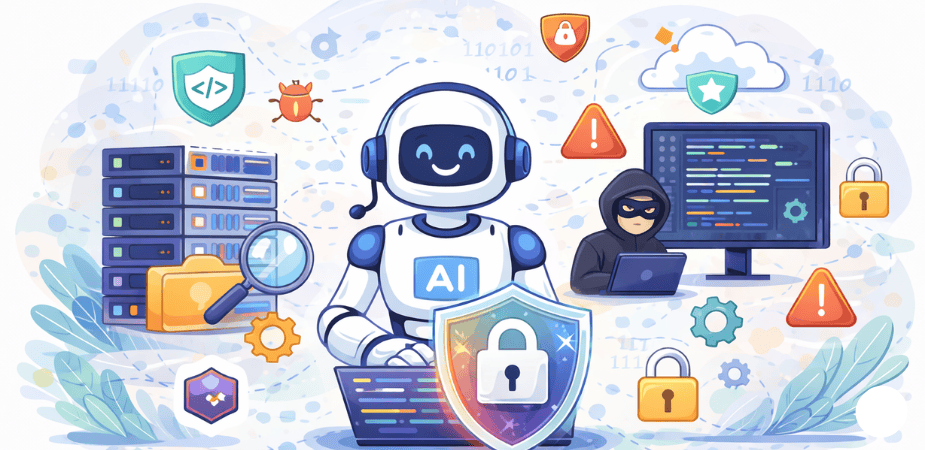
Here’s a situation I’ve seen come up more than once: a team builds a genuinely impressive AI model, spends months getting the accuracy numbers where they want them, deploys it into production — and then realizes they never really thought about what happens when someone tries to break it on purpose.
It’s not negligence. It’s just that AI security feels abstract until it isn’t. And by then, the cost is higher than it needed to be.
So what is AI security, exactly? At its core, it’s the practice of protecting machine learning systems — the models themselves, the data they were trained on, and the infrastructure running them — from attacks that traditional cybersecurity tools weren’t designed to handle. It’s a growing field, and it’s becoming harder to treat as optional.
Why AI Security Is Different from Regular Cybersecurity
If you’ve spent any time in IT or security, you might assume that securing an AI system is just another variation on what you already know: patch vulnerabilities, control access, monitor the network. That’s part of it. But only a small part.
Machine learning models have a quality that makes them uniquely vulnerable: they learn from data, and that learning process can be manipulated. A traditional piece of software either does what it’s programmed to do or it doesn’t. A trained model, though, can be steered in directions its creators never intended — sometimes with barely noticeable inputs.
There’s also the black box problem. With traditional software, you can trace a bug back to a specific line of code. With many deep learning systems, you can’t always explain why the model made a particular decision. That opacity makes it harder to spot when something’s wrong — and easier for attackers to hide what they’re doing.
What this means practically is that AI security requires a different mindset. It’s not just about locking the doors. It’s about understanding how the thing thinks, what it was trained on, and where the reasoning can break down.
The Threats You Actually Need to Know About
The threat landscape here is real, and it’s worth understanding the main categories before you can defend against them.
Adversarial attacks are probably the most talked-about. The idea is that an attacker adds small, carefully crafted changes to an input — often invisible to the human eye — that cause the model to make a completely wrong prediction. An image recognition system might confidently identify a stop sign as a speed limit sign. In a self-driving vehicle or a medical imaging tool, that kind of failure isn’t just embarrassing. It’s dangerous.
Data poisoning happens earlier, during training. An attacker injects corrupted or malicious data into the training dataset, causing the model to learn the wrong patterns — or to develop hidden backdoors that can be triggered later. It’s subtle, it’s hard to detect, and it can sit unnoticed for a long time.
Model extraction is more of an intellectual property threat. By repeatedly querying a deployed model and studying the responses, an attacker can essentially reconstruct a working copy of it. For companies that have invested heavily in building proprietary AI systems, that’s a serious competitive risk.
Membership inference attacks are a privacy concern. They’re about figuring out whether a specific person’s data was included in the training set. That might not sound dramatic, but in healthcare or legal contexts, confirming that someone’s information was part of a model’s training data can expose sensitive details — and create real compliance headaches.
There’s no perfect answer here about which of these is most serious. It depends entirely on what the model is doing, who’s likely to attack it, and what’s at stake if they succeed.
Building Defenses That Actually Work
The good news is that the field has matured enough that there are real, tested techniques for each of these threat categories. The less good news is that none of them are set-it-and-forget-it solutions.
Adversarial training is one of the most effective tools available. The idea is to include adversarial examples in the training process itself — essentially teaching the model what attacks look like so it learns to be more robust against them. It works reasonably well, though it’s not a complete solution, and it needs to be updated as new attack methods emerge.
Input validation acts as a filter before data ever reaches the model. Statistical analysis, anomaly detection, preprocessing pipelines — these can catch a lot of adversarial perturbations before they cause problems. It’s not glamorous work, but it’s worth doing.
Differential privacy is a technique for training models in a way that makes it mathematically difficult to extract information about individual training records. It adds controlled noise to the process, which degrades the model’s performance slightly — there’s always a tradeoff — but significantly reduces the risk of privacy attacks and membership inference exploits.
Beyond these technical controls, there’s the operational side:
- Regular security audits and penetration testing, specifically designed for AI systems (not just generic network pen tests)
- Continuous monitoring for unusual patterns in model behavior or query volumes
- Incident response procedures that account for the unique characteristics of AI security breaches — including the fact that discovery is often delayed
One thing worth saying plainly: a lot of organizations skip the AI-specific testing because they assume their existing security audits cover it. They usually don’t. Adversarial robustness testing and privacy leakage assessments require different methodologies.
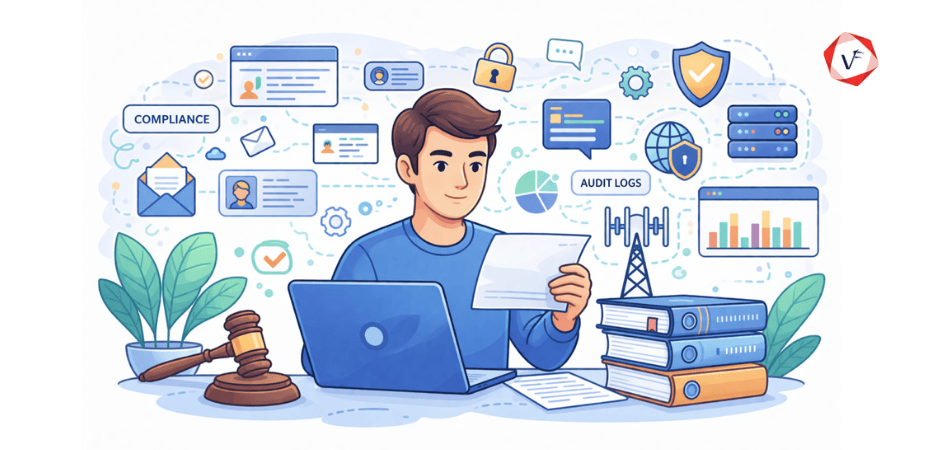
Governance, Compliance, and the Regulatory Reality
The regulatory environment around AI is still catching up with the technology, but it’s moving faster than most people expected.
Across the EU, US, and various industry bodies, there’s increasing pressure on organizations to document how their AI systems work, what they were trained on, and what security measures are in place. The specifics vary by jurisdiction and sector, but the direction is consistent: you need to be able to demonstrate, on paper, that you thought about this.
Risk assessment frameworks have emerged as a useful starting point. A good framework forces you to ask the right questions: How critical is this AI application? How sensitive is the data it touches? What happens if it fails — or gets compromised? Working through those questions systematically tends to surface vulnerabilities that informal processes miss.
Documentation also matters more than it used to. Audit trails covering training data sources, model development decisions, and security testing results aren’t just bureaucratic overhead. When something goes wrong — and eventually something will — that documentation determines how quickly you can respond and how credibly you can explain what happened.
The Human Factor Nobody Talks About Enough
It’s easy to focus on the technical side of AI security and forget that humans are often the weakest point in the system.
Employees who interact with AI systems regularly may not realize that their behavior has security implications. Sharing model outputs carelessly, granting broad access without thinking about it, falling for social engineering that targets AI infrastructure — these are real risks that don’t show up in technical audits.
There’s also the incident response angle. When an AI system has been compromised, figuring out what happened requires a specific kind of expertise. You need people who understand both cybersecurity and machine learning — and that intersection is genuinely rare. Most security teams are strong on one side or the other, not both. Building that interdisciplinary capacity takes time, and the tabletop exercises that keep traditional security teams sharp need to be redesigned for AI-specific scenarios.
I’ve seen organizations assume that their data science team will handle the AI side and their security team will handle the security side. In practice, the two groups often talk past each other when an incident happens. Getting them aligned before something goes wrong is worth the effort.
Where This Is All Heading
A few developments are worth watching closely.
Federated learning — training models across distributed environments where the data never leaves its source — is becoming more common. It’s appealing from a privacy perspective. But it also introduces new security challenges around data poisoning and model integrity, because you have less visibility into what the participating organizations are contributing.
Quantum computing is further out, but it’s on the horizon. It has the potential to break certain cryptographic protections while also enabling new ones. The AI security implications are still being worked out, but organizations building long-term systems should at least be aware it’s coming.
Most immediately, the stakes are rising. AI is moving into healthcare, transportation, financial services, and critical infrastructure. The consequences of an AI security failure in those domains aren’t just technical problems — they affect real people in concrete ways. That’s what makes this field feel urgent rather than academic.
Thinking About Deploying AI Securely?
Vofox’s AI/ML development team helps organizations build and secure intelligent systems from the ground up — with security built into the process, not bolted on afterward. If you’re navigating AI implementation and want to make sure you’re doing it right, we’d be glad to talk through your specific situation.
Or reach us directly:
Phone: (856) 631-6069
Email: info@vofoxsolutions.com
Frequently Asked Questions
What is AI security in simple terms?
It’s the set of practices and tools used to protect AI systems from being manipulated, stolen, or otherwise compromised. That includes protecting the models themselves, the data used to train them, and the infrastructure they run on.
How is AI security different from traditional cybersecurity?
Traditional cybersecurity focuses on software vulnerabilities, access control, and network protection. AI security adds concerns specific to machine learning: adversarial inputs that fool models, manipulated training data, model copying through repeated queries, and privacy attacks that extract information about individuals from trained models.
What are the most common AI security threats?
The big four are adversarial attacks (manipulated inputs), data poisoning (corrupted training data), model extraction (copying a proprietary model), and membership inference attacks (determining what data was used in training). Each requires different defenses.
How can my organization start improving AI security?
A reasonable starting point: do a risk assessment specific to each AI application you’re running, identify which threat categories are most relevant to your context, and run a security audit that specifically tests for adversarial robustness and privacy vulnerabilities. Then build incident response procedures that account for the fact that AI security breaches can be hard to detect and slow to surface.
Is AI security required for compliance?
Increasingly, yes. Regulations in healthcare, finance, and critical infrastructure — plus frameworks like the EU AI Act — are pushing organizations toward documented AI security practices. Even where it’s not explicitly mandated yet, auditors and enterprise customers are starting to ask for it.
What does an AI security audit actually cover?
A proper AI security audit goes beyond standard network and application testing. It should include adversarial robustness testing (trying to fool the model), privacy leakage assessment (testing for membership inference vulnerabilities), model extraction risk evaluation, and review of training data provenance and access controls.