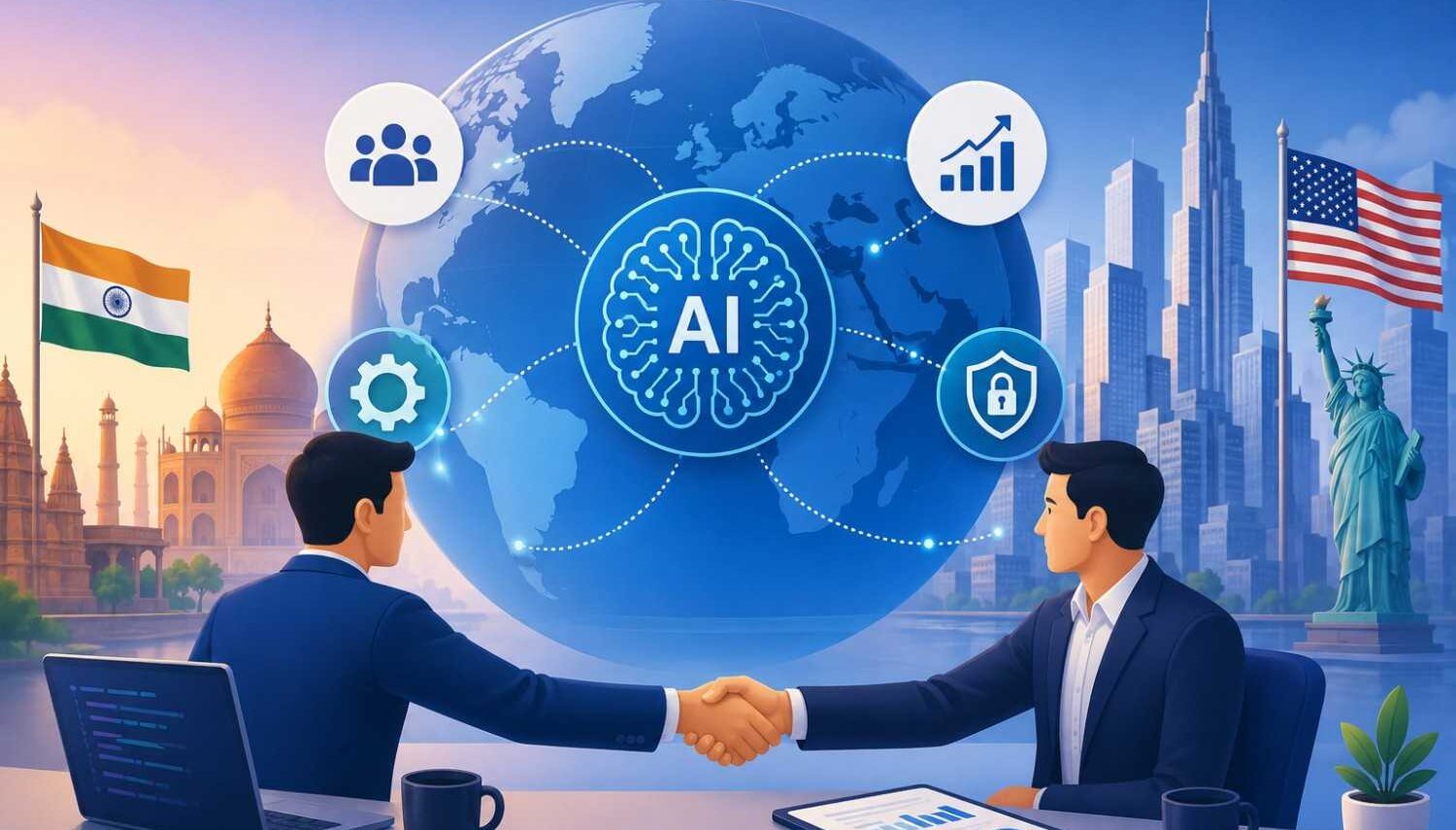
Artificial Intelligence has become one of the key aspects that need to be present in a company’s operations if that company wants to stay relevant in the market. Products are being rewritten around it, customer service is being reshaped by it, and internal processes are being automated because of it. For many US businesses, though, the harder question isn’t whether AI should be adopted, but who should be trusted to build it. That’s where the importance of AI development companies in India comes in. India’s legacy of producing top AI engineering talent tends to draw US companies to turn to Indian partners for services like machine learning models, AI-powered applications, and automation tools. But not all vendors are equal, or equipped to deliver reliable, production-ready AI. This article looks at what should actually be analyzed before a decision is made and where broader support, like IT strategy consulting, matters more than most businesses realize.
Why Choose an AI Development Company in India for Your US Business?
The first reason usually comes down to the cost part. Hiring AI engineers in the US, particularly ones with hands-on experience in machine learning and data engineering, can be expensive, and the hiring process itself can take months. In India, the same expertise is often accessed at a lower cost, and teams can typically be assembled faster because the talent pool is larger.
The second reason is the depth of talent. India produces a high number of computer science and engineering graduates every year, and a significant share of them are trained in AI-related disciplines like natural language processing, computer vision, predictive analytics, and so on. This means a US company isn’t limited to hiring one or two specialists; entire teams with different skill sets can be built around a single project.
There’s also flexibility to consider. Many Indian AI development firms work on a project basis, which means a company doesn’t have to commit to permanent hires before it even knows whether the AI product will succeed. This is particularly useful for businesses that are still validating an idea and don’t want the overhead of a full internal team yet.
That said, none of these advantages matter much if you choose the wrong company. A vendor that’s irresponsible, disorganized and unresponsive but technically skilled can either stall your project or do reworks that can completely ruin your project planning and estimates. This is mainly why US businesses often combine outsourced development with independent IT strategy consulting, so any party can analyze whether a vendor’s approach actually fits the company’s technical and business objectives before money is involved.
How to Evaluate Communication, Time Zones, and Project Management
Communication is where most India-US partnerships either succeed or start falling apart. The technical work might be excellent, but if updates are inconsistent or unclear, trust erodes quickly and this trust factor is something that is hard to rebuild once a project is already underway.
A few things should be thoroughly checked in the beginning itself. Make sure to ask questions like: Is there a specific point of contact (POC) from their side, or does communication happen through different people based on the availability and day? One more question is significant. Do they deliver project on the set timeline and how they deal with project issues. This particularly helps businesses predict how the rest of the engagement will go.
Time zones are the next practical issue. India is roughly 9.5 to 10.5 hours ahead of US time zones, depending on daylight saving. This gap can actually work in a company’s favor if it’s managed properly. Work can continue overnight from a US perspective, so mornings often start with progress already made. But if overlap hours aren’t planned, urgent issues can sit unresolved for most of a business day.
Good vendors build in overlap windows, usually early morning or late evening for the Indian team, so there’s real-time availability for at least a few hours each day. Project management tools also matter here. Whether it’s Jira, Asana, or something similar, there should be visibility into what’s being worked on, what’s blocked, and what’s coming next – not just a status call once a week.
It’s also worth asking how the vendor handles sudden scope changes. AI projects rarely go exactly as planned. AI models get reworked; requirements either pile up or shrink once early results come in, and priorities change based on what stakeholders want. A company that adjusts to these transitions with clear change-request processes is generally easier to work with than one that treats the original scope as fixed no matter what. Partnering with these vendors can bring more complexities to the project, even when the budget and timeline looked fine on paper.
Some US businesses rely on an IT staffing agency like Vofox to assist with the evaluation process, particularly when they are confused about hiring individual contractors or working with a full outsourced team. An agency that is familiar with both models can easily help businesses clarify which approach fits their internal capacity and long-term plans.
How to Assess Post-Launch AI Support and Scalability
AI models rarely remain static once they’re deployed in a business’s real production environment. They need to be closely observed and assessed, retrained as new customer profiles or data comes in, and adjusted when performance starts to dip. That usually happens much sooner than any non-technical stakeholders even expect. A vendor who is not responsible and vanishes after the soft launch can’t become a reliable long-term partner. This is applicable to vendors who might have impressed you with the initial build.
So before signing the official partnership, ask the vendors directly about what their post-launch support looks like. Is there a particular maintenance contract available, or is ongoing work billed separately as needed? How quickly does the vendor respond if a model starts producing inaccurate results in production? How do they solve AI models’ performance issues once they appear? These questions often get skipped or ignored during the excitement of kicking off a new project, and many companies regret it later.
Scalability deserves equal attention. An AI model that performs well on minimal data during an initial or pilot test might behave differently once it starts processing real, high volume customer data. A company running a personalized or customized chatbot for customer support, trained on a few hundred FAQs, may find it performs well during the initial testing phase but starts giving unnecessary or irrelevant answers once it’s handling thousands of varied customer queries a day. A retailer running a recommendation engine on around four to five thousand products may find the existing AI model to be less effective once the product catalogue grows. So, it’s also important to check with the vendor how they’ve handled scaling for other clients, and you can also request client references, portfolios, or case studies rather than accepting general claims that may sound convincing in the beginning but hold little substance.
Documentation is the next thing that’s often taken for granted. If the original development team becomes unavailable due to staff turnover or a change in partnership, clear documentation can help you decide whether to gather a new team for the project from scratch. This is basically the real differentiator in working with an established company rather than a startup.
Finally, it also helps to think about how the AI system fits into the company’s broader technology adoption plan, rather than treating it as just an immediate project. This is another point where IT strategy consulting can add value. It helps businesses figure out whether the AI investment they’ve made aligns with where the company is actually headed over the next two or three years. In simple terms, an experienced IT strategy consulting can guide you toward making the right decisions for your business’s AI future.
Final Thoughts
Choosing an AI development company in India is not about figuring out the lowest hourly charge or choosing the most impressing vendor portfolio. The real advantage of choosing the best vendor is many. They are transparent with communication that allows us to work across diverse time zones; they have a team that can scale with the project, supports your company even after the launch. Businesses that skip the real scrutiny or assessment can team up with a vendor whose demos looked interesting but may struggle once it meets the real customers and data.
If your business is weighing outsourced AI development against building an internal team, or you’re unsure how a new AI initiative fits into your existing systems, it may help to talk it through with people who’ve guided similar decisions before. Vofox works with US businesses on both AI development and the IT strategy consulting that often needs to happen alongside it and can help you figure out what actually makes sense for where your company is headed.
Frequently Asked Questions
Q1: Why should a US business hire an AI development company in India?
Cost savings and access to a large, experienced talent pool are the two biggest reasons why many US businesses often hire an AI development company in India. AI teams from India can be formed faster than equivalent hires in the US, and project-based engagements give companies flexibility before committing to a full internal team. The right partner can also bring hands-on experience from similar projects across industries, which shortens the learning curve.
Q2: What should US businesses look for when choosing an AI development company in India?
Look beyond the technical skills and check how the vendor communicates, how they handle time zone differences, and whether they have a structured project management process. It’s also worth asking what post-launch support is included, since AI models require ongoing monitoring and adjustment. Some businesses bring in IT strategy consulting at this stage to help evaluate vendors objectively.
Q3: How can I evaluate an AI development company’s experience and portfolio?
Before finalizing a vendor, analyze their offerings from the website and check for any case studies relevant to your industry, and if possible, speak with a past client to learn about the vendor’s performance. Also, closely look at their prior work experience to know whether it involved production-level deployment or just prototypes, since these require very different skill sets. A strong candidate often shows more than just the technology stack; they should highlight genuine numbers that are verifiable and tied to real business outcomes.
Q4: How much does it cost to hire an AI development company in India for a US business?
Costs vary depending on multiple factors like project complexity, team size, and engagement model, but Indian rates are comparatively lower than the US rates. A simple AI integration may cost less than custom-built machine learning systems that require continuous training and tuning. It’s always best to request a detailed quote based on your specific requirements rather than relying on general estimates.
Q5: What security and compliance factors should US businesses consider when outsourcing AI development to India?
Before sharing any data with a vendor, cross-check their data protection agreements and access control security, and confirm their compliance with relevant regulations like GDPR or industry-specific standards. It’s also important to know how the vendor handles intellectual property ownership once the project is completed. Companies working with an IT staffing agency in Dallas or anywhere in the US sometimes use that relationship to carefully examine an overseas vendor’s security practices before signing a contract, which adds an extra layer of due diligence.