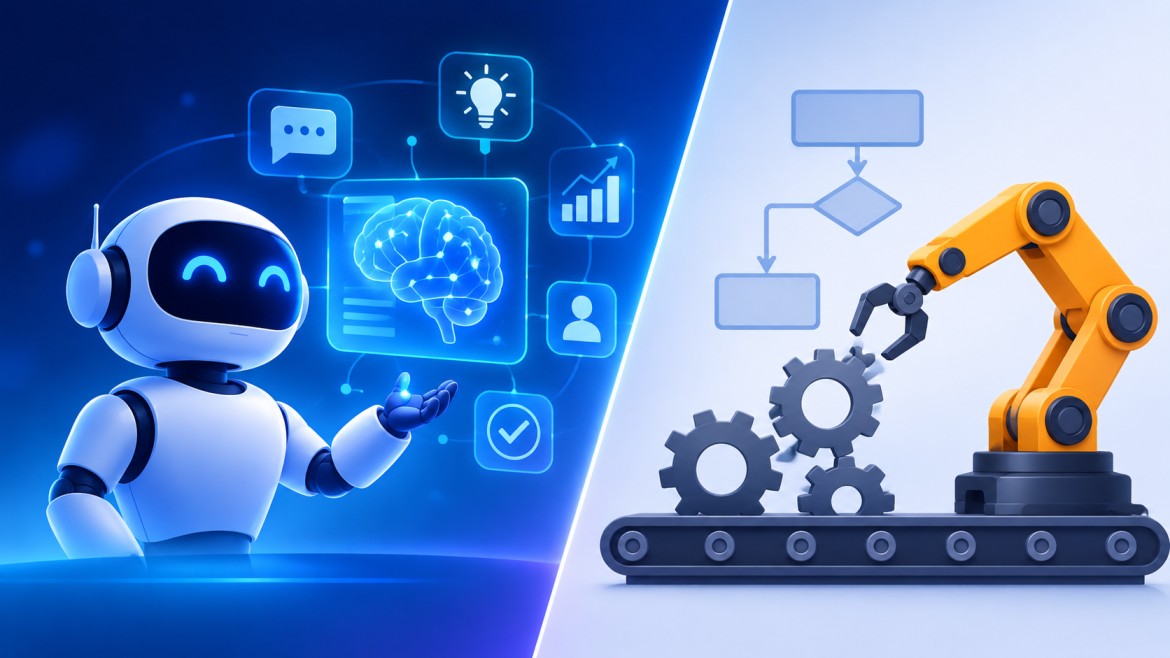
Businesses increasingly rely on automation to improve productivity, reduce operational costs, and manage repetitive tasks. Traditional automation has supported these goals through predefined rules and structured workflows. However, modern business operations often involve complex decisions that require flexibility and contextual understanding. AI agents address these challenges by using artificial intelligence to interpret information, make decisions, and execute tasks independently. This development creates new opportunities for businesses seeking smarter operations. Understanding the differences between these technologies helps organizations choose suitable solutions. An experienced AI development company can help businesses evaluate their requirements and implement intelligent systems that deliver measurable operational improvements.
How AI Agents Differ from Traditional Rule-Based Automation Systems
Traditional rule-based automation systems execute tasks according to predefined instructions. Developers establish specific conditions, triggers, and actions that determine how each workflow operates. For example, an automated invoicing system generates invoices whenever a customer completes an approved purchase. These systems perform repetitive tasks efficiently because they follow consistent rules.
However, traditional automation struggles when situations require interpretation or unexpected decisions. If a workflow encounters information outside its predefined conditions, it may stop functioning correctly. Employees must then investigate the issue and adjust the rules manually. This limitation makes traditional automation less suitable for dynamic business environments.
AI agents introduce greater flexibility through machine learning, natural language processing, and reasoning capabilities. They analyze available information, understand business objectives, and determine appropriate actions. For instance, an AI agent handling customer inquiries can interpret different questions, retrieve relevant information, and provide contextual responses.
Another important difference involves adaptability. Traditional systems generally require manual updates whenever business requirements change. AI agents can use new information and feedback to improve their responses, depending on their underlying models and configuration.
Businesses should also understand how these technologies handle decision-making. Traditional automation follows fixed instructions, while AI agents evaluate context and select actions within defined permissions. Their autonomy depends on the tools, access rights, and safeguards developers establish.
A reliable AI development company can help organizations assess these differences and select suitable architectures. The right approach depends on workflow complexity, operational requirements, and acceptable levels of decision-making autonomy.
Key Benefits of AI Agents for Intelligent Business Process Automation
AI agents offer several advantages for organizations managing complex operations. Their ability to interpret information and perform connected tasks helps businesses improve efficiency across multiple departments.
- Improved Operational Efficiency
AI agents can manage several connected activities with minimal human intervention. They can collect information, analyze requests, update records, and coordinate subsequent actions. This capability reduces manual workloads and allows employees to focus on strategic responsibilities.
- Better Decision-Making
AI agents evaluate information from different sources before recommending or executing actions. They can identify patterns, understand customer requirements, and provide relevant recommendations. Businesses can use these insights to improve operational planning and decision quality.
- Greater Adaptability
Business conditions frequently change because of customer expectations, market developments, and internal requirements. AI agents can respond to changing inputs without requiring developers to rewrite every individual workflow. However, organizations must regularly evaluate their performance and update their underlying configurations.
- Enhanced Customer Experiences
AI agents can support personalized customer interactions through conversational interfaces. They understand customer questions, retrieve relevant information, and provide responses based on available context. Businesses can also use them to manage support requests and prioritize urgent inquiries.
- Improved Workflow Coordination
AI agents can connect different applications and coordinate activities across departments. For example, an agent can identify an incoming customer request, retrieve account information, and create a support ticket. Such capabilities strengthen collaboration between existing business systems.
An experienced AI development company can deliver AI development services that align these capabilities with organizational goals. Effective implementation also requires appropriate data governance, access controls, and human oversight.
Real-World Business Use Cases of AI Agents vs Traditional Automation
Both technologies support business operations, although their capabilities suit different requirements. Examining practical examples helps organizations understand where each approach delivers value.
- Customer Support Management
Traditional automation routes customer inquiries according to predefined keywords or categories. It can send order-related questions to the appropriate department and generate standard responses. However, complicated requests often require human assistance.
AI agents can understand customer intent and examine conversation history. They can retrieve account details, suggest relevant solutions, and resolve common issues independently. They can also escalate sensitive or complicated requests to human representatives.
- Financial Operations
Traditional automation handles repetitive financial activities, including invoice generation, payment reminders, and transaction processing. These workflows follow established rules and work effectively with structured financial information.
AI agents can analyze transaction patterns, identify unusual activities, and investigate potential discrepancies. They can also summarize financial information for employees. Human approval remains important when agents handle sensitive transactions or high-value decisions.
- Human Resource Management
Traditional automation simplifies recruitment administration through application acknowledgments, interview scheduling, and document management. These activities follow predefined workflows and reduce administrative workloads.
AI agents can assist recruiters by organizing candidate information, answering employee questions, and coordinating recruitment activities. They can also help HR teams identify relevant information across internal documents. Organizations must maintain human oversight to support fair and responsible hiring decisions.
- Supply Chain and Inventory Management
Traditional systems monitor inventory levels and generate purchase orders whenever stock reaches predefined thresholds. These systems work well when businesses operate with predictable demand patterns.
AI agents can examine sales trends, supplier information, and inventory conditions to recommend purchasing decisions. They can also identify potential supply disruptions and suggest alternative actions. Their recommendations help supply chain teams respond more effectively to changing operational conditions.
- Sales and Marketing Operations
Traditional automation schedules marketing emails, assigns leads, and triggers follow-up messages based on predefined customer actions. It provides consistency across repetitive marketing activities.
AI agents can analyze customer interactions, summarize sales conversations, and recommend personalized engagement strategies. They can also help sales teams prioritize promising opportunities using available customer information.
Businesses seeking these capabilities should evaluate a suitable AI software development company with experience in enterprise integrations and intelligent workflow design. Choosing the best AI development company also requires assessing technical expertise, security practices, scalability, and ongoing support.
Conclusion
AI agents and traditional automation serve important roles in modern business operations. Traditional systems remain effective for repetitive tasks with predictable outcomes, while AI agents support workflows requiring contextual understanding and flexible decision-making. Businesses should evaluate their operational complexity, available data, security requirements, and automation objectives before choosing an approach. A capable AI development company can help organizations implement suitable solutions and integrate them with existing infrastructure. Combining both technologies can create efficient business processes while maintaining appropriate human oversight. Ultimately, the right implementation helps organizations improve productivity, strengthen decision-making, and build more adaptable operations.
FAQs
-
What is the difference between AI agents and traditional automation?
Traditional automation follows predefined rules to complete repetitive tasks. AI agents use artificial intelligence to interpret information, make context-based decisions, and perform tasks within established permissions.
-
How do AI agents make decisions compared to rule-based automation?
Rule-based systems execute predefined instructions whenever specific conditions occur. AI agents evaluate available information, interpret context, and select suitable actions using their underlying models and decision frameworks.
-
Can AI agents work alongside existing business automation systems?
Yes. AI agents can integrate with existing automation platforms, CRM systems, ERP software, and enterprise applications through APIs and other integration methods. This approach helps businesses retain established workflows while introducing intelligent capabilities.
-
Which is better for businesses: AI agents or traditional automation?
The right choice depends on business requirements. Traditional automation suits predictable, repetitive processes, while AI agents support complex workflows involving changing information and contextual decisions. Many organizations benefit from combining both technologies.
-
How can businesses identify the right processes for AI agent implementation?
Businesses should identify workflows involving repetitive information gathering, complex decision-making, multiple applications, or frequent customer interactions. They should also evaluate data availability, implementation costs, security requirements, and expected business value before deployment.